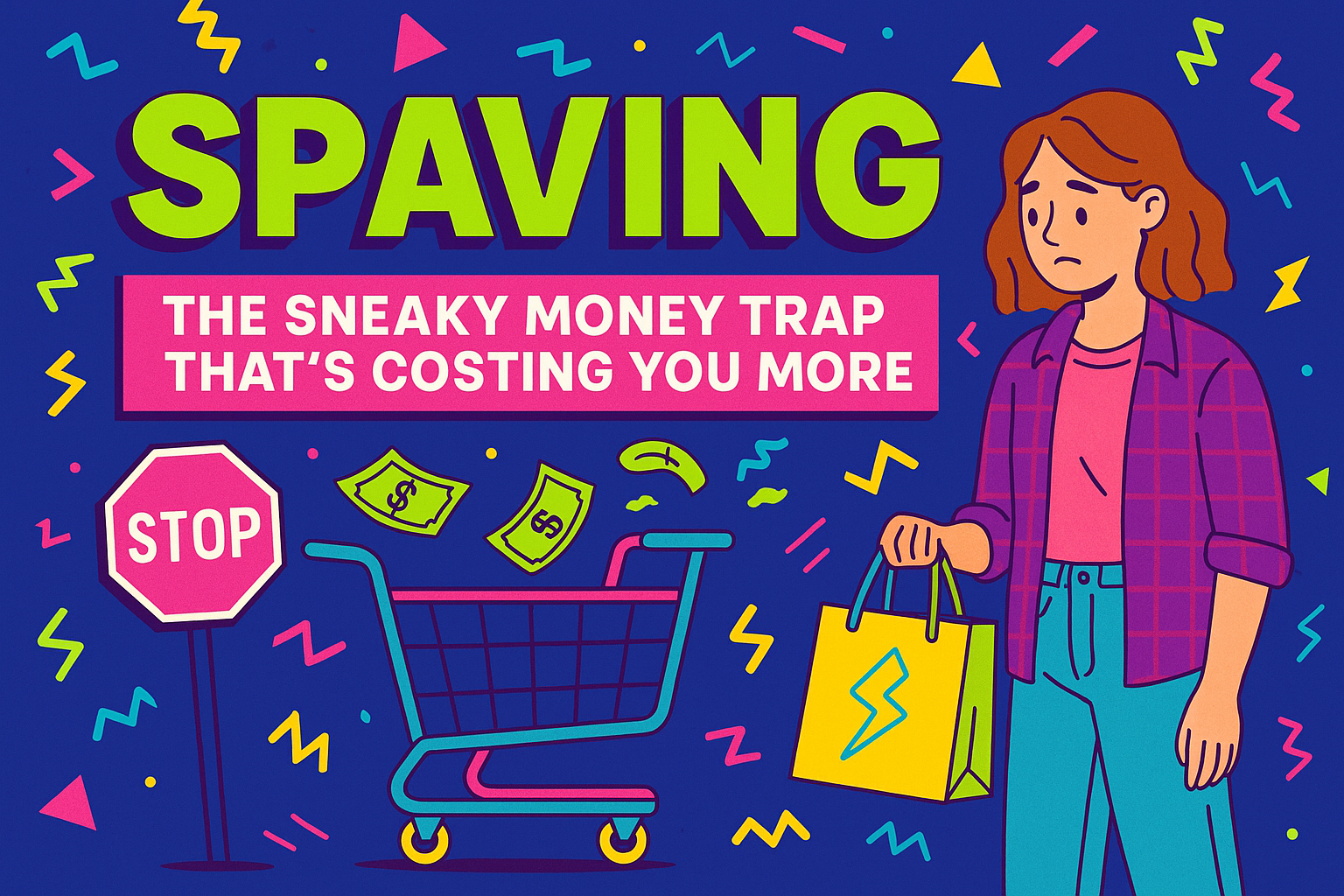
Spaving is when you spend more money just to “save,” like adding items to reach free shipping or buying extra in a BOGO deal. It feels like a discount, but it actually increases your spending. Learning how to spot and stop spaving can help you cut wasteful costs and truly save money.
Introduction
Have you ever added an extra $20 to your cart just to get free shipping? Or grabbed three items in a “Buy 2, Get 1 Free” deal when you only needed one? If so, you’ve experienced spaving.
Spaving — spending more money just to feel like you’re saving — is one of the sneakiest traps in modern shopping. It looks like a deal, but it’s actually draining your wallet.
Here’s what spaving really is, why it happens, and how to stop it before it kills your budget.
What Is Spaving?
At its core, spaving = spending more to “save.”
It’s when a sale, discount, or “free” perk convinces you to buy things you didn’t plan to. The problem? You end up with more stuff, less money, and very little actual savings.
Common Examples of Spaving
- Free Shipping Thresholds
- “Spend $50 and get free shipping.”
- Instead of saving $8 on shipping, you spend $20 extra on items you didn’t need.
- Buy One, Get One Free (BOGO)
- You walk out with two sweaters instead of one. You saved nothing — you just doubled your cost.
- Membership Deals
- Paying $100 a year for “exclusive discounts” that you rarely use.
- Limited-Time Offers
- Countdown timers that push you to add more to your cart, fearing you’ll “miss out.”
Why Do We Fall for Spaving? (The Psychology of Discounts)
- Scarcity & Urgency → “Only 2 left in stock!” triggers panic buying.
- Fear of Missing Out (FOMO) → We hate losing potential savings more than we hate spending money.
- Dopamine Rush → Scoring a “deal” lights up the brain’s reward system, tricking us into overspending.
Spaving works because it feels like a win — but in reality, it’s a loss.
How to Stop Spaving and Save Smarter
✔ Ask yourself: Would I buy this at full price?
✔ Compare costs: Is the “free shipping” worth the extra spend?
✔ Use wishlists: Add items and wait 24 hours before buying.
✔ Unsubscribe from emails: Less temptation = less spaving.
✔ Set a spending plan with the 50/30/20 Rule Budgeting method to keep your money on track.
Saving vs. Spaving: What’s the Difference?
- Saving = keeping money in your account, building toward financial goals.
- Spaving = spending more to chase the illusion of savings.
The difference is simple: true saving leaves you with more money, not more stuff.
Conclusion
Spaving is everywhere — from online stores to subscription offers. The next time you’re tempted to add “just one more thing” to your cart, stop and ask yourself if it’s really saving or just spaving.
By avoiding this sneaky trap, you’ll not only cut wasteful spending but also free up cash for the things that really matter.
✨ Want more ways to fight back against overspending? Check out my post on the 👉 No Buy Challenge 2025: How to Save Money Fast and Spend Smarter.
Leave a Reply