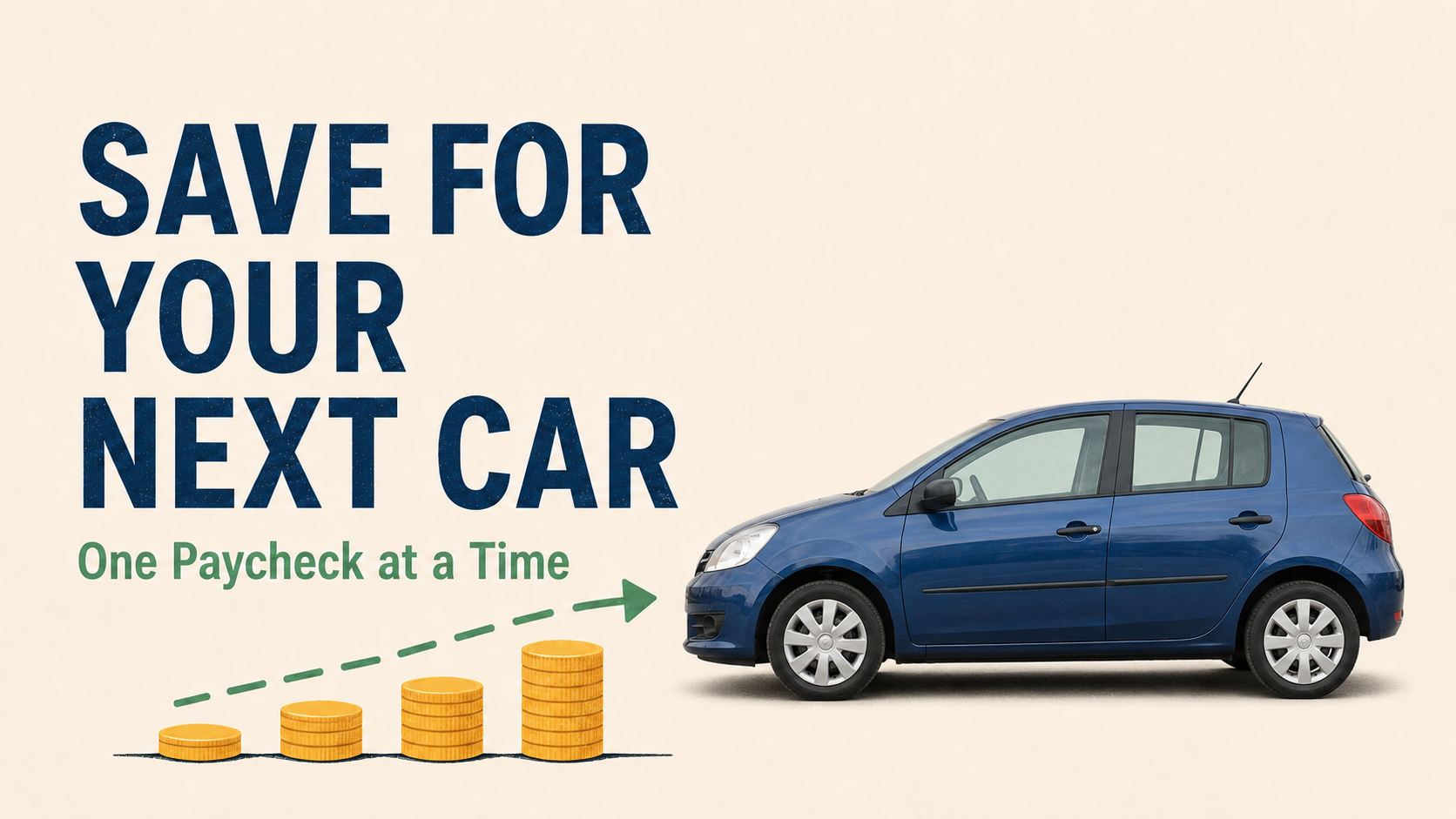
Buying another car is one of those expenses most of us know is coming eventually, yet it is easy to ignore while our current car is still running.
Then the transmission fails, the repair bills start piling up, or the car suddenly becomes unreliable. That is usually the worst time to start figuring out how to pay for the next one.
My approach is simple: I save a manageable amount from every paycheck long before I need another car. I may not be able to put $6,000 into a car fund today, but I can put away $50 this payday.
How I Save for Our Next Car
I keep a separate savings account specifically for our next car. Every two weeks, I put $50 into it. My spouse contributes the same amount.
Because we receive 26 paychecks per year, each of us saves:
- $1,300 per year
- $3,900 over three years
- $6,500 over five years
Together, we can contribute $13,000 over five years, plus any interest the money earns.
For me, losing $50 from each paycheck is much easier to manage than trying to find thousands of dollars after a car suddenly dies. The individual deposits do not feel significant, but slowly and consistently, they add up.
This type of account is sometimes called a car sinking fund. The name may sound complicated, but it is simply money saved gradually for an expense you know is coming.
Start Saving While Your Car Is Still Running
The best time to save for your next car is while your current one is still dependable.
I also try to maintain my vehicles and handle many repairs myself. Every additional year I can safely keep a car running gives my savings more time to grow. I have saved thousands of dollars over the years by learning to do much of my own car work. You can read more about that in my article on how working on your own car can save you money.
My goal is not to replace a car as quickly as possible. I want to keep the one I have running while quietly preparing for the day when replacing it makes more sense than repairing it.
Pick an Amount That Works for You
You do not have to save $50 per paycheck. The right amount is whatever you can consistently afford without making it harder to pay your current bills.
Here is what several biweekly savings amounts become over time:
| Saved each paycheck | After one year | After five years |
|---|---|---|
| $10 | $260 | $1,300 |
| $25 | $650 | $3,250 |
| $50 | $1,300 | $6,500 |
| $100 | $2,600 | $13,000 |
These totals are for one person and assume 26 paychecks per year. If two people contribute the same amount, the totals double.
Even $10 or $25 per paycheck gives you a head start. You can always increase it later if your income grows or you pay off another expense.
Keep Your Car Fund Separate
I use a Capital One high-yield savings account because the account I use is free, earns interest, and makes it easy for me to keep the money separate. This is not sponsored, and Capital One is not the only option. Any savings account without a monthly fee can work.
Keeping the car money separate is important for me. If it were mixed with our regular checking or general savings, I would have a harder time knowing how much was truly available for a car.
I treat the transfer like another regular bill and move the money every payday. Automating the transfer can make this even easier because the money is saved before it has a chance to be spent.
You Do Not Have to Reach the Full Goal
If your car needs to be replaced earlier than expected, the money you saved still helps.
A partially funded account could provide a down payment, reduce the amount you finance, cover taxes and registration, or pay for a major repair that keeps your current car on the road.
Saving $3,000 when you hoped to save $6,000 is not a failure. It still puts you in a much better position than having nothing ready.
I Use the Same Method for Other Goals
I use this paycheck-by-paycheck system for more than our next car. We also have separate funds for vacations and money we plan to invest.
For our vacation fund, my spouse and I each contribute $50 per paycheck. Together, that adds up to $2,600 per year before interest. Instead of trying to pay for an entire trip from one month’s income, we build the money gradually throughout the year.
The same idea can work for home repairs, appliances, holiday spending, medical expenses, or almost any other large future purchase.
Slowly but Surely, It Adds Up
Saving $50 once will not change much. Saving $50 every payday for several years can.
That is what I like about this method: it does not require a huge financial sacrifice all at once. It relies on consistency and gives time a chance to do the heavy lifting.
You may not be able to buy your next car today, but you can start preparing for it today. When the time finally comes, you will be glad you did.
Leave a Reply